 Sunlight is a key factor in photosynthesis, the process used by plants and other autotrophic organisms to convert light energy, normally from the Sun, into chemical energy that can be used to synthesize carbohydrates and fuel the organisms' activities.
 Sunlight, solar radiation that is visible at Earth’s surface. The amount of sunlight is dependent on the extent of the daytime cloud cover. Some places on Earth receive more than 4,000 hours per year of sunlight, as in the Sahara; others receive less than 2,000, as in regions of frequent storminess.
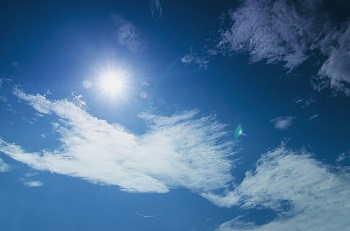 Sunlight, also known as solar radiation, refers to the incoming light to the Earth that originated from the Sun. This light represents a portion of the electromagnetic spectrum that includes infrared, visible light, and ultraviolet light.
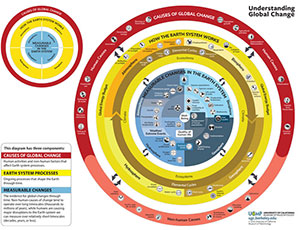 When sunlight strikes the Earth, it is mostly reflected or absorbed. Reflected light bounces back into space while absorbed light is the source of energy that drives processes in the atmosphere, hydrosphere, and biosphere.
 In fact, all life on Earth is ultimately dependent on the power of the sun, carried by sunlight, part of which is visible and part of which is invisible. Part of that sunlight is known as ultraviolet light (UV).